
Hotel Buffet Equipment Checklist: Plan a Better Service Line

Hotel Buffet Equipment Checklist: Plan a Better Service Line

A successful hotel buffet line is planned around the menu, guest flow, service duration and refill process—not simply around how many chafing dishes fit on a table. The goal is to keep food at the correct temperature, make dishes easy to identify and serve, reduce queues, and give staff safe access for replenishment.

This checklist helps hotel operators, F&B managers, caterers and purchasing teams translate a menu into an efficient equipment plan. It covers the visible buffet line as well as the backup pans, thermometers, transport items and cleaning tools that keep service running behind the scenes.

Define the Service Before Buying Equipment

Begin with five operating questions. These determine the equipment type and quantity more accurately than guest count alone:

  • What is being served? Separate hot mains, fried foods, delicate eggs, soups, congee, sauces, chilled items, bakery products and beverages.
  • How long is the service? A two-hour breakfast and a six-hour conference buffet require different holding and refill plans.
  • How quickly will each dish turn over? High-turnover food often performs better in smaller pans replenished frequently.
  • Where will the line operate? Confirm indoor or outdoor use, available electrical circuits, ventilation, fire restrictions and transport distance.
  • Who will refill it? Staff need a route that does not cross the guest queue or require lifting hot pans over customers.
Targets product-specific search intent while reinforcing key content

Map the Guest Journey

Arrange the buffet in the sequence guests use it. Place plates at the entrance, followed by cold starters or breakfast items, hot mains, side dishes, sauces and serving utensils. Put cutlery and napkins at the end or on dining tables so guests do not carry unnecessary items while serving food.

Separate beverage, toast, noodle, egg and carving stations when space permits. These stations involve waiting, customisation or repeated handling and can stop the main line if placed in its centre. For busy periods, two-sided access or duplicated high-demand dishes can shorten queues without expanding every part of the buffet.

Hot-Holding Equipment

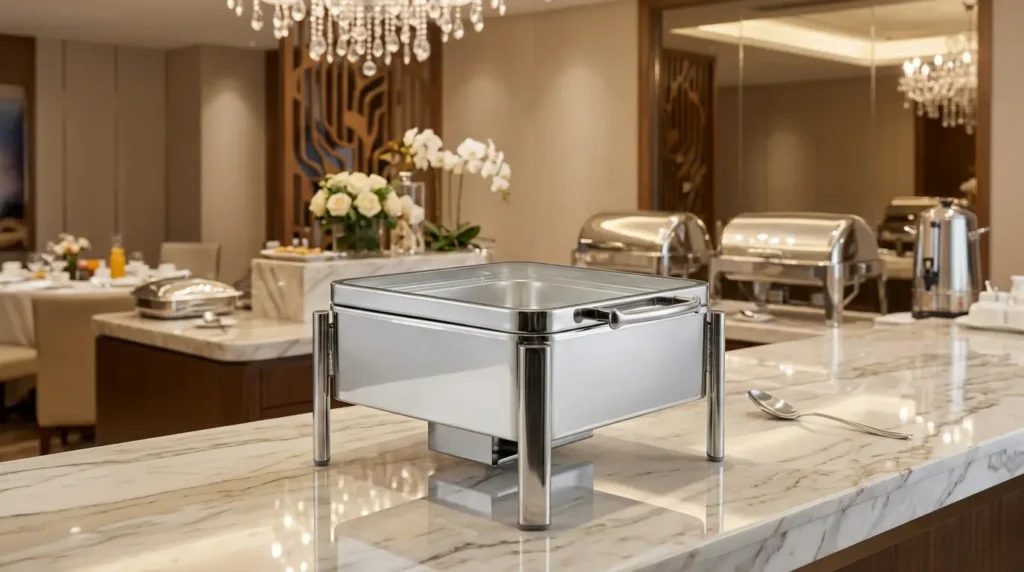
Commercial chafing dishes hold food after it has been cooked; they are not cookware and should not be used to bring cold food rapidly to a safe temperature. Sunnex offers fuel, electric, induction-ready and waterless dry-heat formats, allowing operators to match the heating method to the venue and menu.

EquipmentBest suited toPlanning questions
Water-bath chaferGeneral mains, curries, vegetables, rice and breakfast foodWho monitors and refills the water pan? Is spill control adequate?
Electric chaferIndoor hotel buffets with reliable powerAre outlets, cable routes and circuit capacity confirmed?
Fuel chaferPortable or temporary setups where power is limitedDoes the venue permit open flame? Where will fuel be stored and changed?
Waterless dry-heat chaferOperations seeking faster setup and no water-pan handlingIs the food compatible with direct pan heating and the available control range?
Induction chaferPremium counters with compatible induction systemsAre the chafer and heat source fully compatible?
Warming plateServing vessels, coffee pots and flexible displaysIs the vessel heat-compatible and stable on the plate?

Choose equipment for the actual dish. Foods that dry out quickly may need a lid and gentler holding method; crispy foods may benefit from shorter batches and controlled venting. Always test a complete menu under real service conditions before a major event.

GN Pans and Covers

Gastronorm pans standardise the containers used in many commercial chafers and bain-marie systems. A GN 1/1 pan measures 530 × 325 mm, while fractional pans divide that footprint into smaller modules. A full-size rectangular chafer often accepts one GN 1/1 pan or a combination such as two GN 1/2 pans, but operators should confirm compatibility before purchasing.

Menu usePractical pan choiceReason
High-volume main dishGN 1/1 or two GN 1/2 pansBalances capacity with menu flexibility
Two side dishesTwo GN 1/2 pansAllows separate dishes in one chafer footprint
Sauces and garnishesSmaller fractional GN pansSupports cleaner presentation and frequent replacement
Fast-turnover breakfast foodShallower pansEncourages smaller batches and faster replenishment
Deep liquid dishDeeper pan or dedicated soup warmerProvides capacity while reducing spill risk

Include solid lids, notched lids for utensils, spare pans and transport covers in the purchase plan. The spare-pan ratio should be based on how many dishes must be replenished simultaneously, how far the production kitchen is from the buffet and how quickly used pans return from washing.

Soup, Congee and Sauce Stations

A dedicated soup warmer or soup station is usually easier to serve from than a deep rectangular food pan. Wet-heat soup warmers provide indirect heat around a removable inner pot, while a covered station reduces heat loss and keeps a ladle ready for service.

Plan one utensil and one clearly visible label for each product. Allergen information and local labelling requirements should be incorporated into the same signage system. If soup, congee and sauce are positioned together, leave enough clearance for lid movement and for guests to return ladles without crossing adjacent containers.

Cold Food and Beverage Equipment

  1. Cold foods need active temperature control through refrigeration, refrigerated displays or ice-based systems appropriate to the venue. FDA consumer buffet guidance recommends keeping cold food at 40°F (4°C) or below and using small serving portions that are replaced rather than topped up when temperature control is uncertain.
    • Refrigerated or ice-cooled platters for dairy, seafood, cut fruit and other perishable items
    • Juice, water and milk dispensers selected for beverage type and required cooling method
    • Cereal dispensers, bakery baskets and food-safe covers
    • Drip trays and cup dispensers at beverage stations
    • Backup containers held under suitable refrigeration until needed

Utensils, Labels and Safety Tools

The visible appliance is only part of the setup. Every buffet line also needs:

    • One suitable tong, spoon, fork or ladle for each dish, plus clean replacements
    • Calibrated probe thermometers and a written temperature-check schedule
    • Food labels, allergen information and dish identifiers
    • Heat-resistant gloves and safe pan-changing tools for staff
    • Non-slip mats, drip trays and cable protection where needed
    • Sneeze guards or other protection required by local rules
    • Cleaning cloths and sanitiser managed under the operation’s food-safety plan

Temperature and Refill Plan

Under the FDA Food Code, time/temperature control for safety food is generally held at 135°F (57°C) or above. FDA and USDA consumer buffet advice uses a more conservative 140°F (60°C) target. Operators must follow the rule adopted by their jurisdiction and verify the food itself with a calibrated thermometer rather than relying only on an appliance dial.

Do not mix a new batch into an old pan. Replace the pan with a fresh, preheated batch so staff can control time, temperature and food quality. Keep backup hot food in approved hot-holding equipment, not at room temperature, and establish who records temperatures and authorises disposal when limits are exceeded.

Sample Equipment Checklist

ZoneEssential equipmentOften-forgotten items
EntrancePlate dispensers or stacks, trays if usedQueue signs, spare plates
Cold sectionRefrigerated display or ice setup, cold pansDrainage, backup platters, separate utensils
Hot sectionChafers, compatible GN pans, lids, heat sourceSpare pans, thermometer, refill route, cable covers
Soup sectionSoup warmer, inner pot, lid, ladleDrip tray, labels, water-jacket check where applicable
Beverage sectionDispensers, urns, cups and glassesDrip trays, stirrers, waste point, refill containers
Service supportHot/cold backup storage and transport cartsTemperature log, gloves, clean replacement utensils

Frequently Asked Questions

How many chafing dishes does a hotel buffet need?

There is no reliable guest-count-only formula. Start with the number of hot dishes, then adjust for pan configuration, serving volume, turnover, service duration and whether popular items need duplicate access. A GN 1/1 chafer may hold one full pan or multiple fractional pans, so menu design matters as much as equipment count.

Should drinks be placed on the main buffet line?

Usually not when guest volume is high. Beverage pouring, coffee preparation and refilling slow movement and create spill risk. A separate beverage station lets guests return for drinks without re-entering the food queue.

What is the best heating method for an indoor hotel buffet?

Electric equipment is often practical where fixed outlets and no-flame policies apply. Fuel equipment remains useful for portable service, while waterless and induction systems may reduce water handling or support a particular counter design. Confirm the venue, menu and utilities before selecting a system.

Get the latest news and updates to your inbox

We only use your information to send you emails that are most relevant to your specific role in the foodservice industry.
[rvp_show no_products='8' slider_use ='true']

Get the latest news and updates to your inbox

We only use your information to send you emails that are most relevant to your specific role in the foodservice industry.

[do_widget id=black-studio-tinymce-6]

Online MarketPlace

The Place

The Place

HKTV Mall

HKTV Mall