Soup, congee and sauces are among the most demanding buffet foods to hold. Thin liquids lose heat quickly when uncovered, while thick or dairy-based recipes can catch at the bottom, form a skin, thicken excessively or separate when exposed to too much heat for too long.
The solution is not simply to turn the thermostat higher. Better results come from using the right holding method, transferring food at the correct temperature, limiting evaporation, stirring appropriately and replacing food in manageable batches.
A commercial soup warmer is designed to maintain ready-to-serve food, not to cook raw ingredients or rapidly reheat chilled soup. Sunnex guidance for buffet equipment makes the same distinction: warming equipment keeps food at serving temperature, while food must be properly cooked before presentation.
For previously cooked and cooled time/temperature control for safety food, the FDA Food Code generally requires rapid reheating to 165°F (74°C) for 15 seconds before hot holding. Once on the line, the same code generally requires hot holding at 135°F (57°C) or above. Local rules differ, so follow the authority with jurisdiction over the operation.
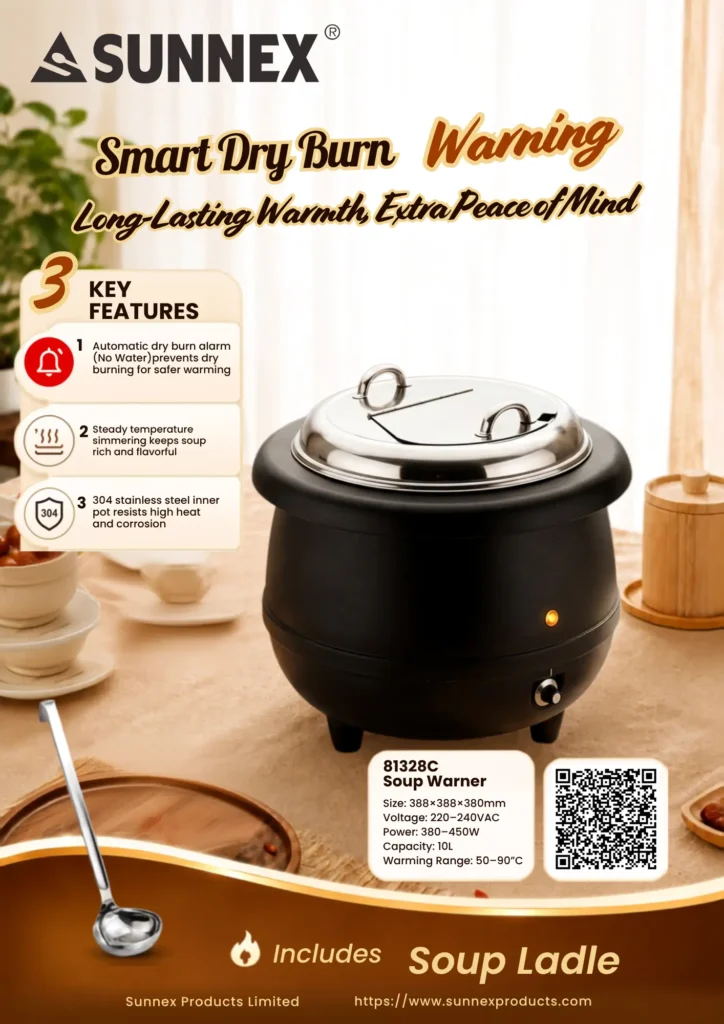
A wet-heat soup warmer works like a bain-marie. The heating element warms water in an outer jacket, and that water transfers heat to the removable inner pot. Because the element does not apply its full heat directly to the food container, the system provides gentler and more distributed warming.
This makes wet heat particularly useful for:
- Cream soups and bisques
- Congee and other starch-thickened dishes
- Gravy and reduced sauces
- Curry, chilli and stew
- Cheese or dairy-based sauces, subject to recipe testing
Wet heat reduces scorching risk, but it does not eliminate it. Thick solids can still settle, water can evaporate from the jacket, and excessive holding time can continue to change texture.
1. Fill the Water Jacket First
Add the quantity of water specified by the manufacturer before connecting the appliance. Too little water raises dry-operation risk; too much can overflow when the inner pot is inserted. Place the warmer on a stable, level counter away from the edge.
2. Reheat the Food Separately
Bring soup, congee or sauce to the temperature required by local food-safety rules using proper cooking or reheating equipment. A holding appliance may warm too slowly to move chilled food through unsafe temperature ranges within the permitted time.
3. Transfer, Cover and Set
Place the hot food in the clean inner pot, insert it into the prepared warmer and fit the lid. Begin with the manufacturer’s recommended setting, then validate it by measuring the food rather than judging steam or relying only on the dial.
4. Stir Correctly
Stir thick products at intervals so solids do not remain on the bottom and heat is redistributed. Use a clean utensil that reaches the base and sides without damaging the pot. Stir gently for emulsified sauces; aggressive mixing can affect appearance and texture.
5. Check Food Temperature
Use a calibrated probe thermometer in more than one location, especially after a refill, a setting change or heavy guest traffic. FDA consumer buffet advice recommends using a food thermometer and keeping hot buffet food at 140°F (60°C) or warmer; commercial operators should follow their locally adopted code, which may specify 135°F (57°C).
6. Monitor Water and Warnings
Extended service can reduce the amount of water in the jacket. Check it at intervals permitted by the manual. If a dry-burn or no-water warning activates, treat it as a prompt for immediate action—do not assume the appliance has switched itself off unless the product documentation expressly confirms that function.
7. Replace, Do Not Continuously Top Up
Prepare smaller backup batches and replace the inner pot or serving container when needed. Continuously mixing new food into an old batch makes time, temperature, quality and allergen control harder to manage.






 YouTube
 Instagram
 Facebook
 LinkedIn