

Choosing a GN pan by footprint alone only solves half the problem — depth is where capacity, heat distribution, and service speed actually live. Standard gastronorm depths run from 20mm to 200mm, and matching the right depth to each dish type prevents both wasted storage space and food that’s over-exposed to holding heat.
What GN Pan Depth Should You Use for Each Type of Buffet Dish?
What GN Pan Depth Should You Use for Each Type of Buffet Dish?
The Standard GN Depth Options
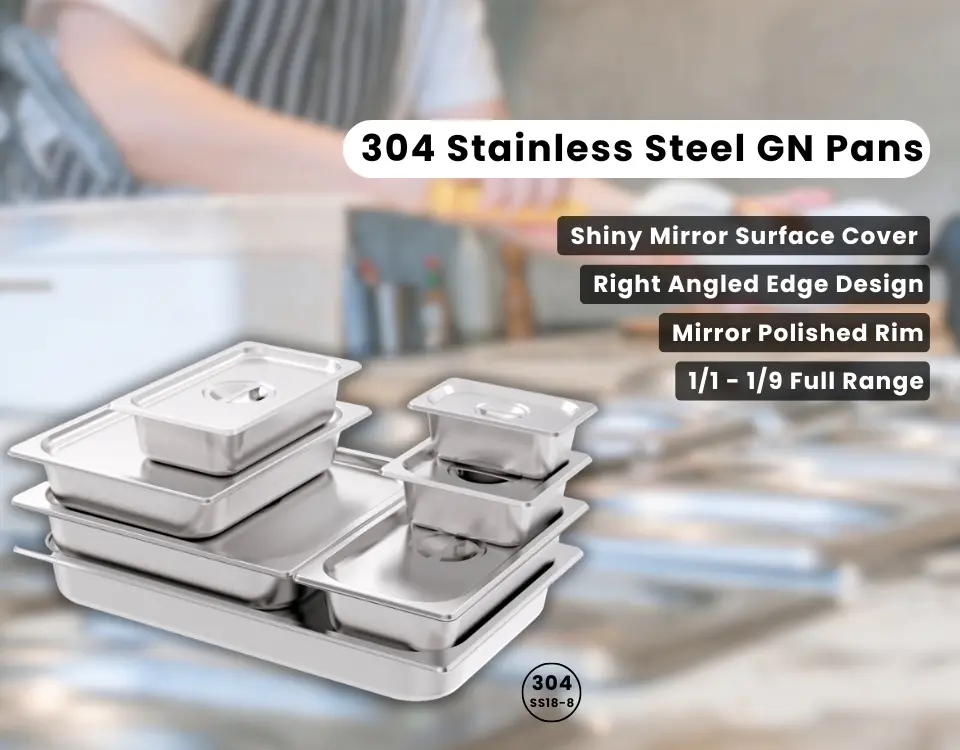
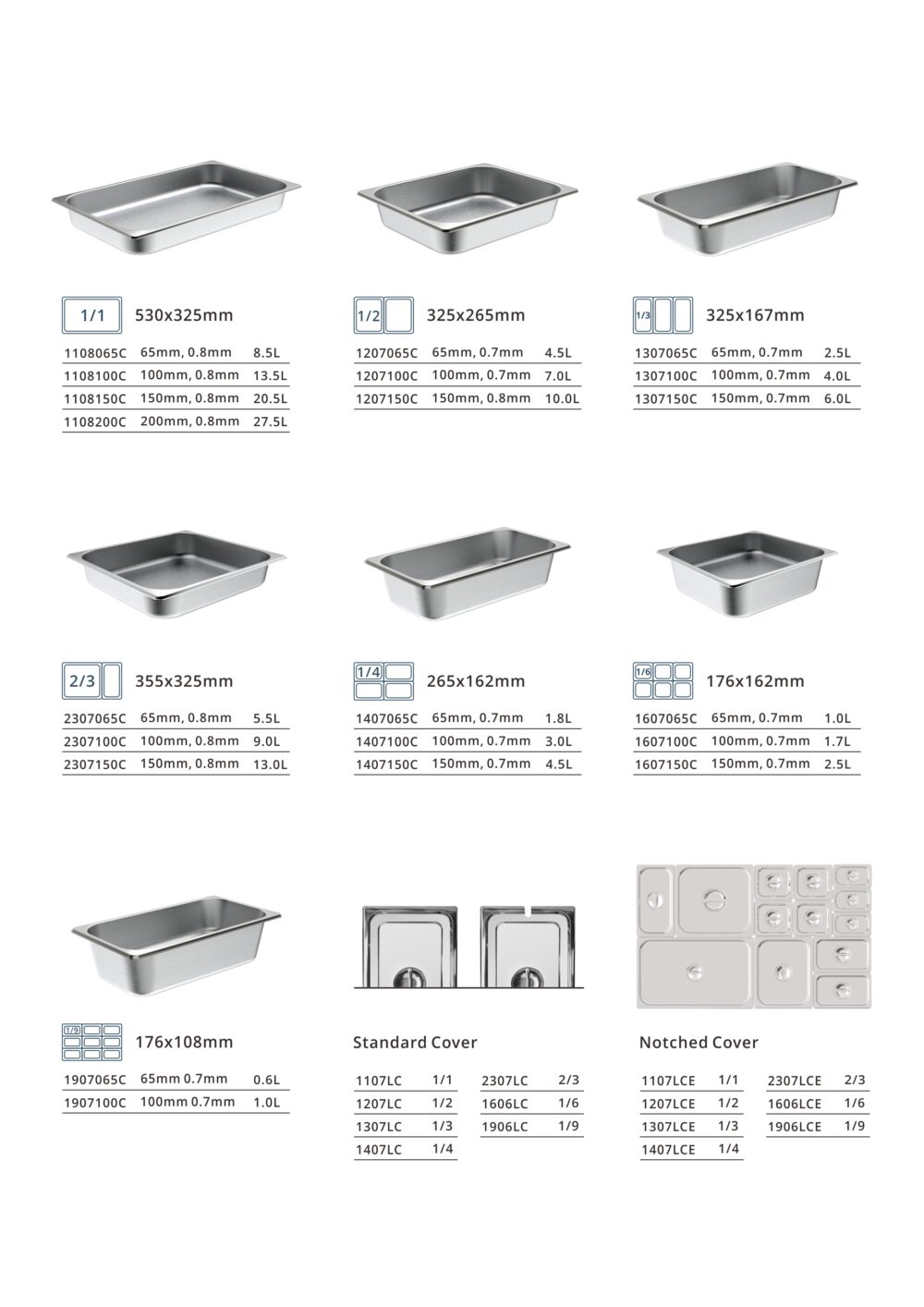
Commercial gastronorm pans come in six standardized depths: 20mm, 40mm, 65mm, 100mm, 150mm, and 200mm. As a practical reference, a GN 1/1 pan at 65mm depth holds approximately 8.5 litres, while the same footprint at 200mm depth holds around 27-30 litres — nearly triple the capacity in the same floor space.
Shallow Pans (20-40mm): Garnishes, Herbs, and Fast-Access Items
Shallow 20-40mm pans suit delicate items, pastries, sliced toppings, and herbs that need frequent access with minimal digging. They’re also the standard choice for salad bar toppings, pizza garnishes, and any display item where visual presentation and quick swaps matter more than holding volume. A practical rule: if the food will be topped up constantly rather than left to hold, go shallow.
Mid-Depth Pans (65mm): The Everyday Workhorse
The 65mm depth is the most versatile and widely used option across commercial kitchens, functioning as the default for prep, bain maries, combi ovens, and — most relevant for buffet operators — standard hot-holding chafer service. For buffet chafing dishes and steam tables specifically, 65mm is the most popular depth because it balances adequate food capacity with proper heat distribution while fitting standard chafing dish frames. This depth works well for everyday mains, side dishes, and general buffet presentation where the priority is even heating rather than maximum volume.
Critically, this clock is cumulative, it counts every stretch of time the food spends in the danger zone across prep, transport, and staging, not just the time it sits on the chafer line during service.
Deep Pans (100-150mm): Soups, Curries, and Batch Holding
Soups, stews, curries, and gravies need more thermal mass and holding capacity, which is exactly what 100-150mm pans provide. The tradeoff is that deeper pans cool and heat less evenly than shallow ones, so any liquid-heavy dish in this depth range should be stirred regularly during service to prevent hot spots and cold pockets. This depth range also suits high-volume banquet holding where fewer refills during a long service is a priority, though operators should plan for the added weight when lifting a full 150mm pan.
Extra-Deep Pans (200mm): Bulk Storage, Not Buffet Display
200mm pans are built for bulk stock, large-batch soup production, and ingredient storage rather than active buffet display — the depth maximizes capacity but makes food at the bottom harder to reach and slower to heat evenly. Most guides recommend reserving 200mm depth for back-of-house prep and storage, confirming beforehand that the depth clears your chafer lid or refrigeration shelf before ordering.
Quick Reference by Dish Type
| Dish Type | Recommended Depth | Why |
|---|---|---|
| Garnishes, herbs, condiments | 20-40mm | Frequent access, fast visual check, minimal digging |
| Standard buffet mains & sides | 65mm | Best heat distribution; fits standard chafer frames |
| Soups, curries, gravies | 100mm | Adequate thermal mass for longer hot-holding |
| Stews, high-volume banquet holding | 150mm | Fewer refills; stir regularly to distribute heat |
| Bulk stock & ingredient storage | 200mm | Maximum capacity for back-of-house prep, not display |



 YouTube
 Instagram
 Facebook
 LinkedIn