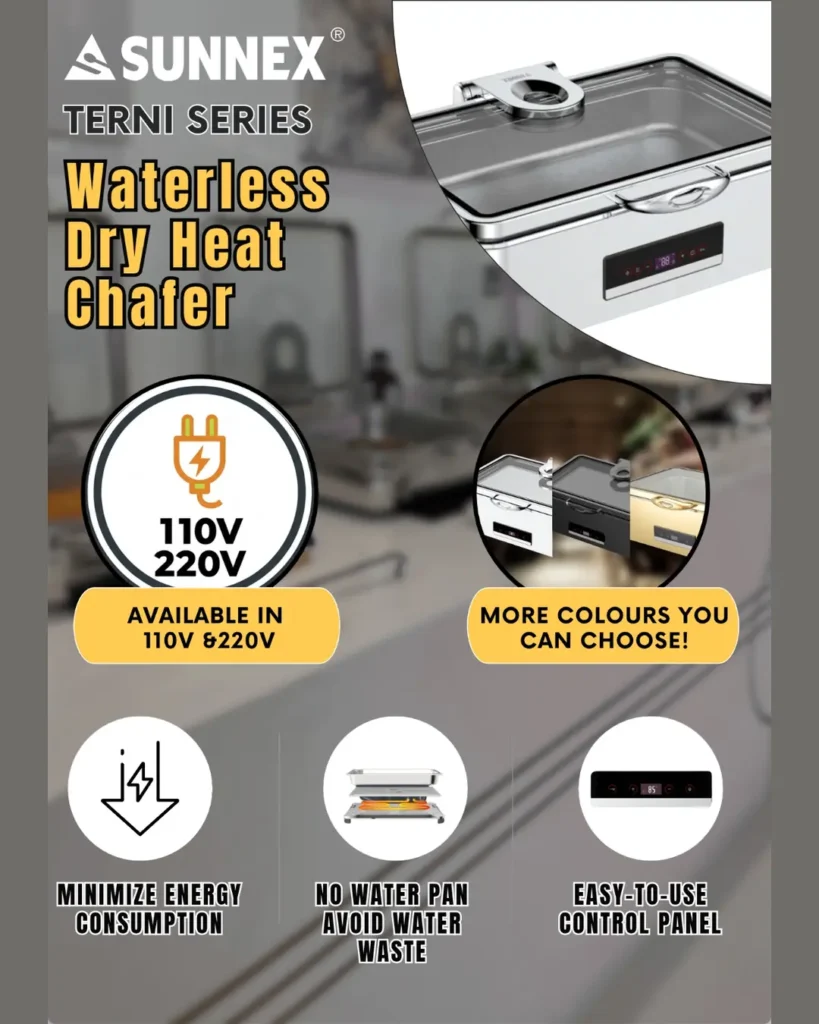
The Sunnex Terni Waterless Dry Heat Chafer now offers a 110V option alongside the existing 220V choice, giving hotel teams, caterers and equipment distributors another option when specifying electric buffet equipment.
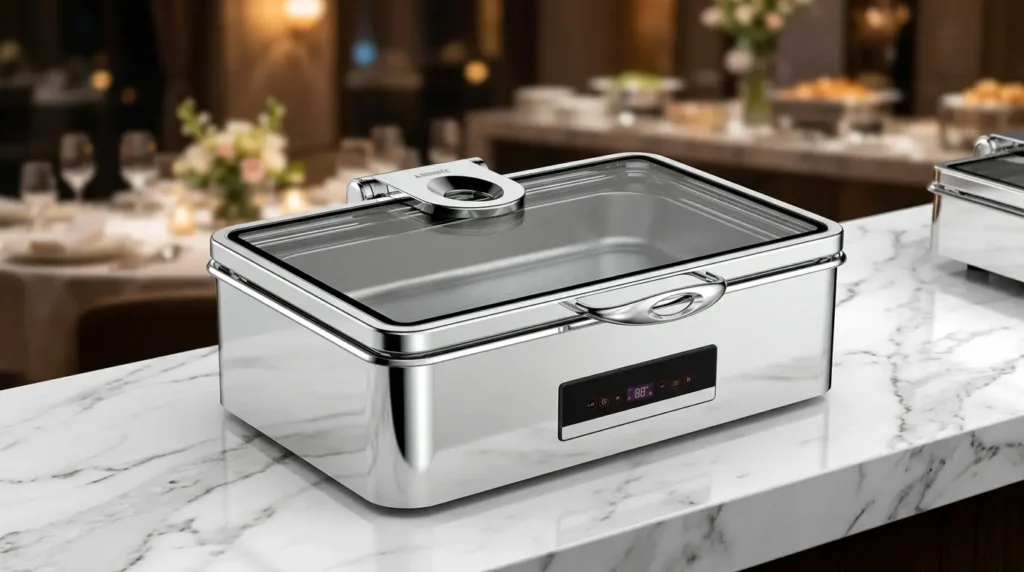
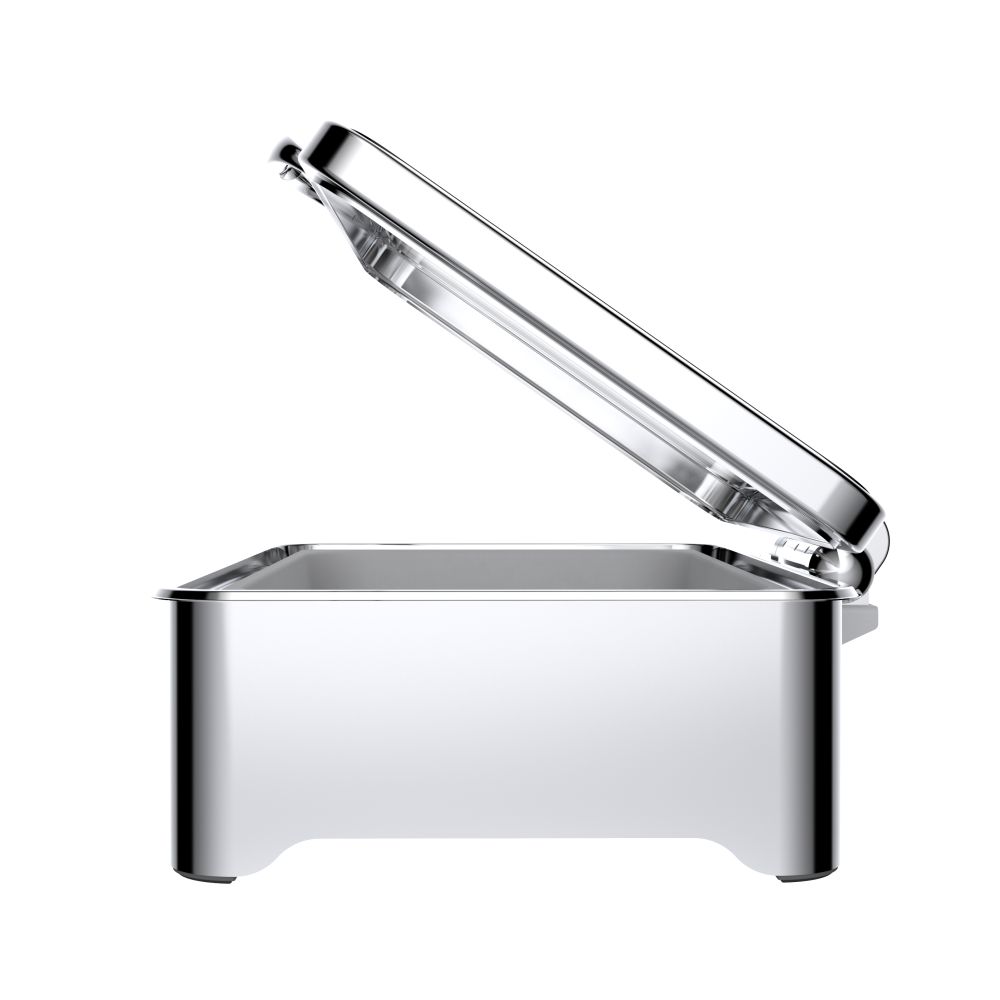
Its waterless design removes the need for a water pan, while digital controls make settings straightforward to access. The update brings the Terni concept to buyers looking for a lower-voltage version—without changing the central benefit: hot holding without a water bath.
Matching equipment to the installation is an essential part of any purchasing decision. With a 110V option now available, buyers can request a Terni model suited to the electrical requirements of their project.
For example, the full-size 8.5L model W21-11HLM30 is listed with a 100–120VAC, 50/60Hz supply rating and 400–576W rated power.
This is a separate voltage option, not a universal dual-voltage appliance. Confirm the selected model’s rating, plug configuration and installation requirements before ordering.
Traditional water-bath chafers require water preparation and monitoring. Terni takes a different approach: its dry-heat system operates without a water pan.
That means no water bath to fill before service, no routine water top-ups during operation and no used water bath to empty afterwards.
For busy buffet teams, this removes a task from the service routine. It also eliminates the water used specifically for the chafer’s heating bath—although normal cleaning is still required.
The waterless design does not mean that every food should be held in the same way. Follow the operating instructions and assess the holding requirements of your menu.
The Terni Series features a front-facing digital control panel, keeping the controls accessible during setup and service.
The full-size 8.5L 100–120V model includes three preset temperature settings: 54°C, 76°C and 88°C. These are equipment settings, not a guarantee of the temperature throughout the food.
Choose the appropriate setting through your food-safety procedure and verify actual food temperatures. Not every preset is suitable for every food or hot-holding application.
For buyers, the important question is how the controls fit into a consistent routine: preparation, temperature checks, replenishment and closing down.








 YouTube
 Instagram
 Facebook
 LinkedIn