
 USD
USD HKD
HKD
When procuring GN pans, chafers, serving equipment, or kitchen tools, buyers frequently encounter two stainless steel grades: 304 and 201. Both are marketed as stainless steel, both look similar on a polished surface, and both are offered at very different price points. Understanding the genuine technical and practical differences between these two grades is one of the most important decisions a catering buyer can make — because the difference affects not just longevity, but hygiene safety, operating cost, and compliance.
304 or 201 Stainless Steel? What Every Hotel and Catering Buyer Needs to Know
304 or 201 Stainless Steel? What Every Hotel and Catering Buyer Needs to Know
The Chemistry Behind the Difference
Stainless steel gets its corrosion resistance primarily from chromium, which forms a passive oxide layer on the steel surface that prevents rust. The amount of chromium — and crucially, the amount of nickel — determines how effective and durable that protection is.
Here is the core compositional difference between the two grades:
Why This Matters in a Commercial Catering Environment
Commercial catering is one of the most demanding environments for stainless steel:
-
GN pans, chafers, and serving trays are repeatedly washed in commercial dishwashers at 60–85°C with strong industrial detergents containing chloride compounds
-
Equipment regularly contacts acidic foods — citrus, vinegar-based dressings, tomato sauces — that accelerate surface degradation on lower-grade steel
-
Equipment sits in humid, salt-laden buffet environments for hours at a time
Under these conditions, the difference in corrosion resistance between 304 and 201 becomes visible within months on vulnerable items. Surface dulling, pitting, and early rust spots — particularly around welded joints and the rims of pans — are the most common early signs of 201 steel degrading in commercial use. These are not just cosmetic problems: pitted surfaces trap bacteria and become harder to sanitise effectively.
304 Stainless Steel: The Professional Catering Standard
304 stainless steel — also known as 18/8 stainless steel (reflecting its 18% chromium and 8% nickel content) — is the internationally recognised benchmark grade for commercial food contact surfaces. It is the grade required or recommended by FDA and NSF standards for equipment with direct food contact.
Its key properties in a catering context:
-
Excellent resistance to corrosion from water, chloride cleaners, acidic foods, and humid environments
-
Non-reactive with food — will not leach compounds into food even after prolonged contact
-
Superior long-term finish — maintains its polished appearance through thousands of wash cycles
-
Good weldability with low risk of post-weld corrosion — important for pans and containers with welded seams
-
Non-magnetic (which can be relevant for induction cooking and equipment compatibility)
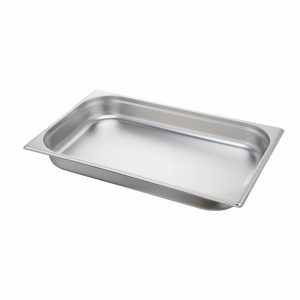
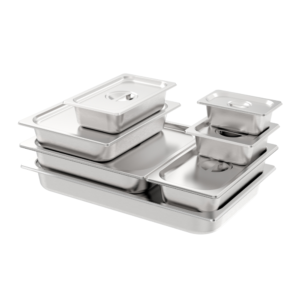
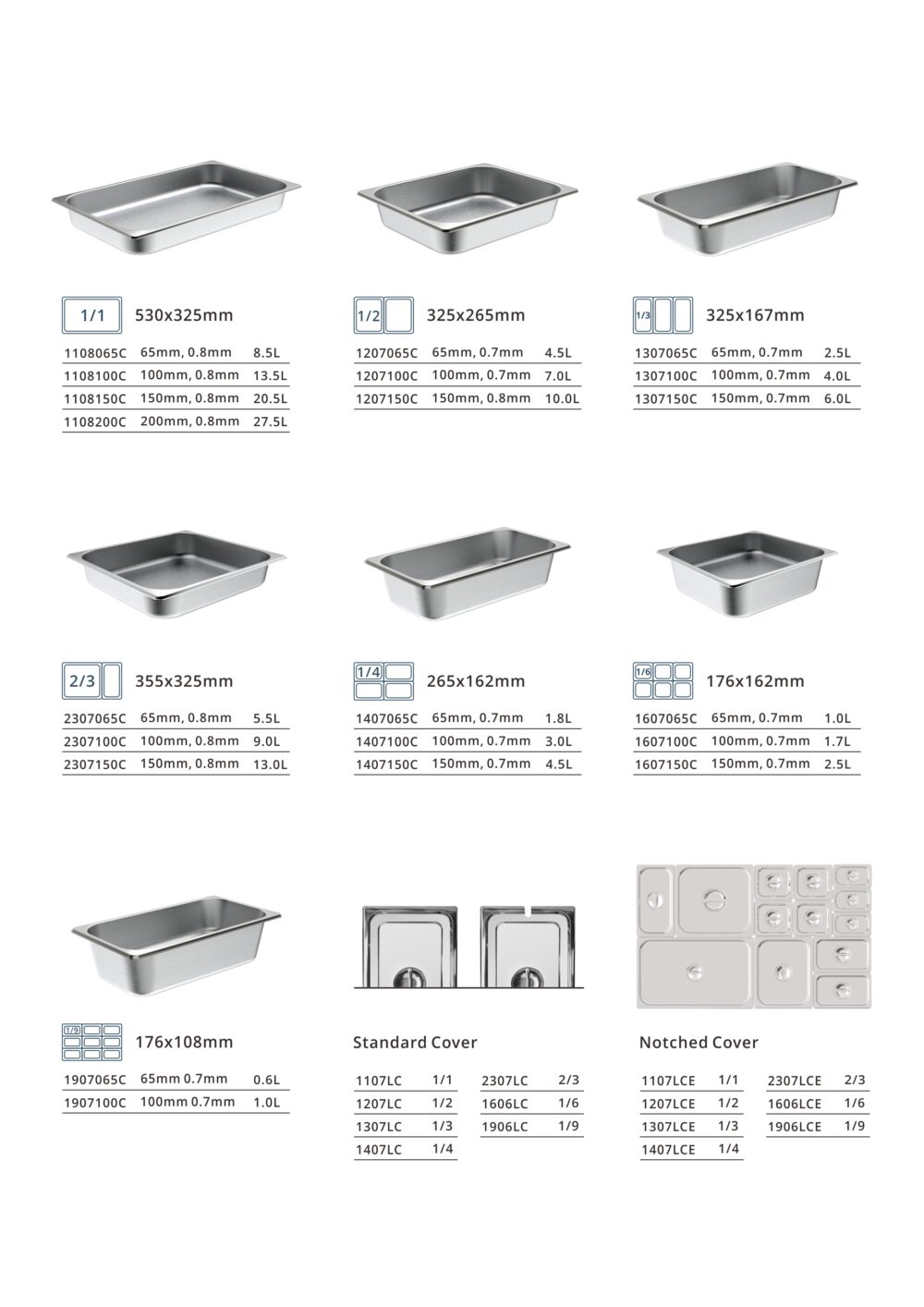
Sunnex’s premium GN pan range — the 304 Sturdy Series — uses 304 stainless steel throughout, with thicknesses from 0.7mm to 0.8mm across all pan sizes, specifically chosen for its durability and hygiene performance in high-volume catering environments.
201 Stainless Steel: Where It Is Appropriate
201 stainless steel is not inherently unsuitable for catering — it is a question of matching the grade to the application. It performs acceptably in lower-stress environments and is a cost-effective choice where equipment does not face the most demanding conditions.
Appropriate uses for 201 in catering:
-
Economical GN pans used for dry food storage, dry transport, or cold holding (where acidic food contact and prolonged wet exposure are minimal)
-
Serving accessories, display risers, or decorative elements not in direct food contact
-
High-replacement-rate items where the priority is cost-per-cycle over longevity
-
Dry zone tables, shelving, and furniture in kitchen environments
Where 201 underperforms:
-
Direct contact with acidic foods (citrus, vinegar, fermented dishes, tomato)
-
Long-duration wet or humid environments (steam table use, chafer water pans)
-
Items with welded joints subject to repeated heavy-chemical cleaning
-
Any application where the surface will be closely scrutinised by guests — rust specks on a buffet GN pan are a direct visual signal of poor quality to hotel guests
Sunnex’s economical 201 stainless steel GN pan range (C2 Series) is specifically positioned as a cost-effective option for appropriate applications — this is a deliberate and transparent product architecture, not a hidden quality compromise.
The Simple Test: How to Identify the Grade You Have
A quick practical test that any kitchen manager can perform:
-
Magnet test: Bring a magnet close to the steel surface. 304 is non-magnetic (the magnet will not stick). 201 may show slight magnetism after cold-working, so a weak attraction can indicate 201 or a lower grade. Note: this is indicative, not definitive.
-
Check supplier documentation: Any reputable supplier should be able to provide material certification confirming the steel grade. If they cannot, treat the grade as unverified.
-
Acid spot test kits are available commercially and provide a more definitive grade identification — useful for procurement audits.
Procurement Decision Framework
| Buying Scenario | Recommended Grade | Reason |
|---|---|---|
| GN pans for hot food service (chafers, steam tables) | 304 | Prolonged wet, hot, acidic contact requires maximum corrosion resistance |
| GN pans for cold storage, transport, prep | 304 preferred; 201 acceptable | Lower stress environment, but 304 recommended for longevity |
| Chafer frames and bodies | 304 | Guest-facing; must maintain appearance over years of use |
| Back-of-house kitchen tools and utensils | 304 or 201 | Depends on use intensity and acid exposure |
| Decorative display elements (not food contact) | 201 acceptable | Lower hygiene requirement, appearance-led purchase |
| Budget high-turnover replacement items | 201 | Explicit cost-over-longevity decision, appropriate if understood |


 YouTube
 Instagram
 Facebook
 LinkedIn