

Storage space is one of the most overlooked factors when buying chafing dishes — until a hotel banquet department runs out of shelving or a catering van can’t fit the day’s equipment. Stackable and non-stackable chafer designs solve this problem very differently.
The Storage Showdown: Can Stackable Chafers Really Save Your Space?
The Storage Showdown: Can Stackable Chafers Really Save Your Space?
How Much Space Non-Stackable Chafers Actually Take Up
Non-stackable chafers must be stored as complete, individual units side by side, since their frame geometry isn’t designed to nest safely on top of one another. Best-practice storage guidance recommends separating chafer components — lids, water pans, and frames — onto dedicated stainless steel racks organized by GN pan size rather than storing them fully assembled, which helps reduce footprint even for non-stackable designs. Even with disassembly, though, non-stackable units still require proportionally more floor or shelf space as a hotel’s chafer inventory grows.
What Makes a Chafer "Stackable" in the First Place
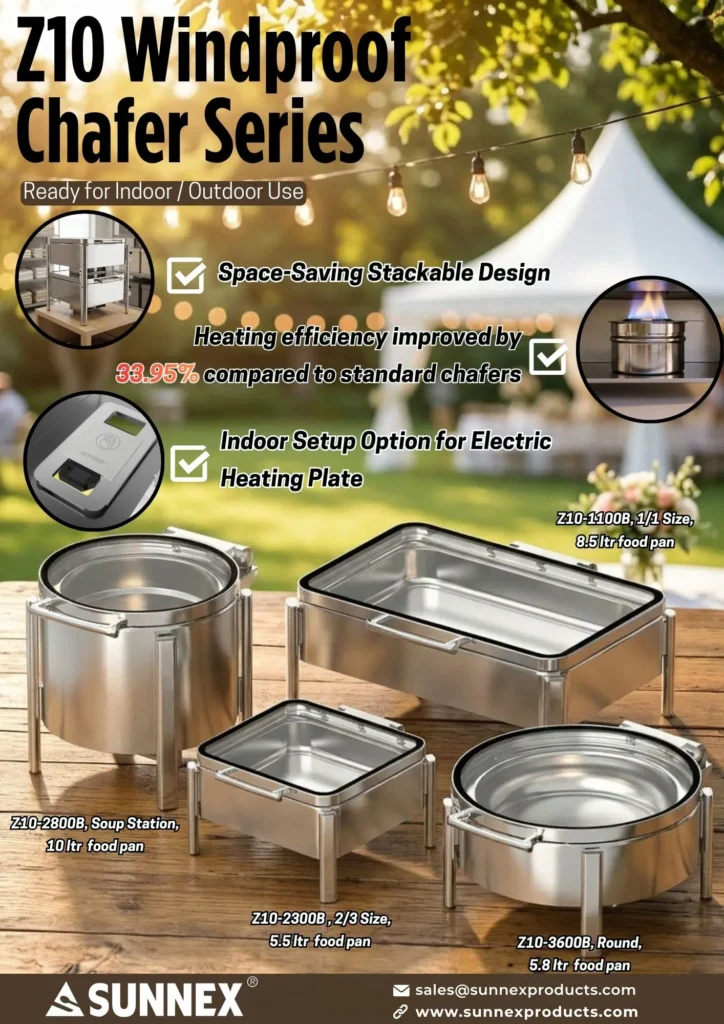
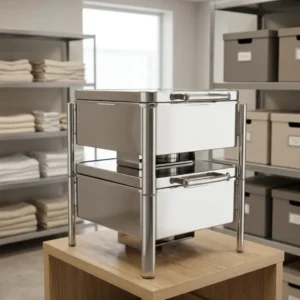
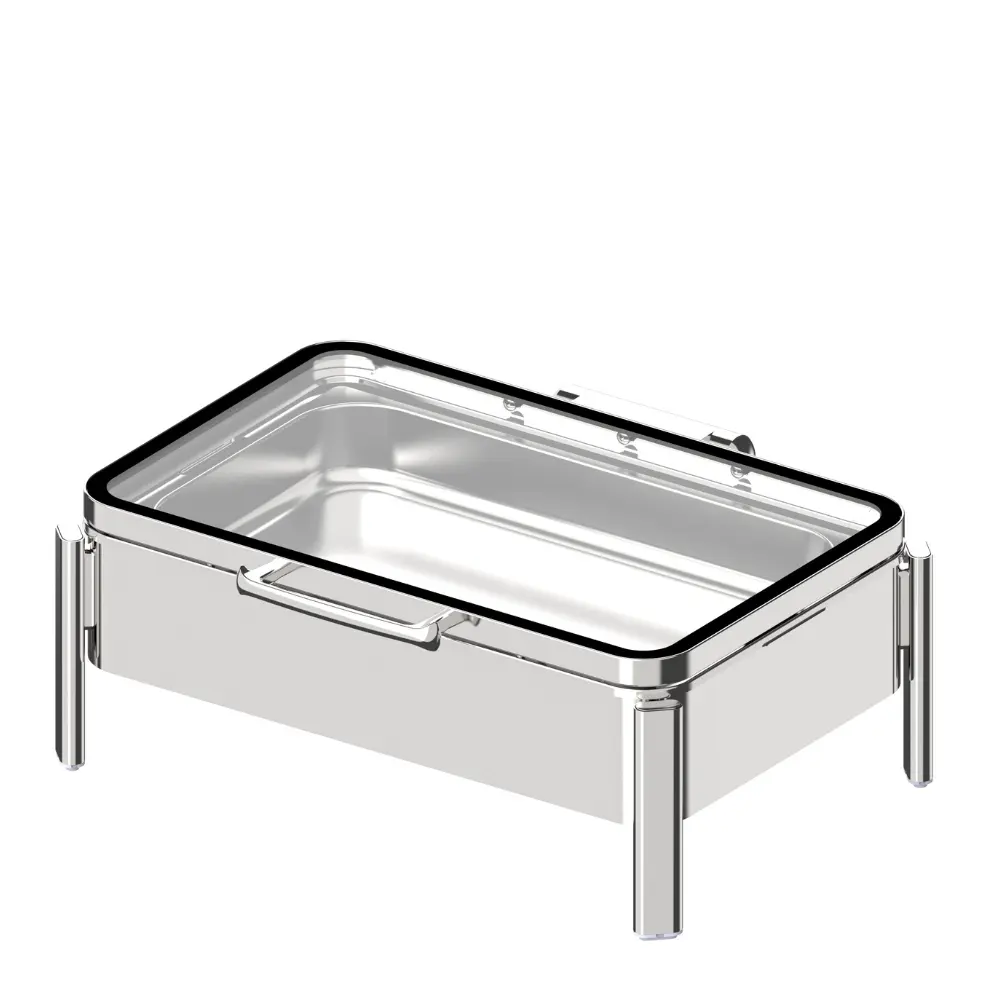
Stackable chafer designs, such as the Sunnex Z10 Windproof Stackable Series, are cleverly engineered so multiple units nest securely into a single vertical footprint. This isn’t just a marketing label — it changes how many units fit into the same storage room, and it changes how staff physically move equipment between storage and the buffet line. Rather than carrying units one at a time, a nested stack of 3-4 chafers can be moved and positioned as a single object.
The Off-Site Catering Case for Stackable Design
For caterers running events away from a home kitchen, the benefit compounds. A stackable frame design significantly minimizes storage footprint in the van or storage unit and makes transportation effortless for busy off-site catering operations. Loading a nested stack takes one trip; loading the equivalent number of non-stackable units takes several — a meaningful time difference when setup windows before an event are tight.
Collapsible Containers as a Complementary Solution
Some operators pair chafer storage with dedicated collapsible transport containers, which fold down to a fraction of their assembled size and can even be tucked beneath draped banquet tables when not needed on the line. Combining a stackable chafer frame with collapsible outer storage compounds the space savings across both the warehouse and the event venue itself.
When a Non-Stackable Frame Is Still the Right Call
Non-stackable chafers aren’t automatically the wrong choice. Some premium designs prioritize a heavier, rigid single-piece frame specifically for stability during long, high-traffic banquet services — a priority that can matter more than storage density for a hotel with one fixed, permanent buffet station that’s rarely relocated or stacked. The decision ultimately comes down to whether your operation values storage density and mobility, or single-unit rigidity for a stationary setup.
Side-by-Side Comparison
| Factor | Stackable (Z10 Series) | Non-Stackable |
|---|---|---|
| Storage Footprint | Significantly reduced via nesting | Larger; requires individual side-by-side storage |
| Transport Handling | Move as one nested stack | Each unit loaded and carried separately |
| Ideal Setting | Off-site catering, multi-station hotels, tight storage rooms | Fixed, permanent buffet lines prioritizing frame rigidity |
Sunnex Z10 Stackable Chafing Dish
-

 New
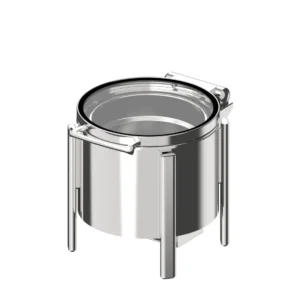
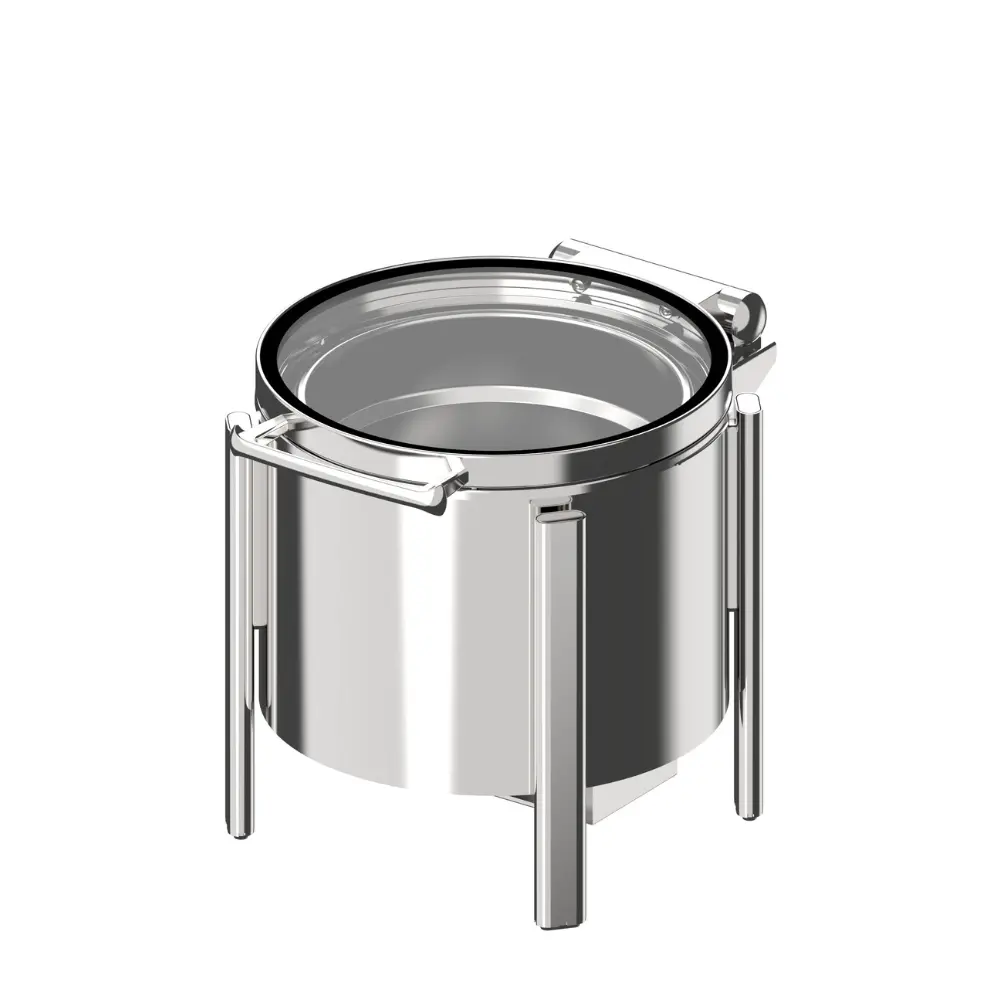
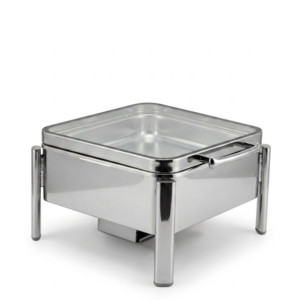
New10L, Soup Station, Windproof Stainless Steel Chafer (Stackable Z10 series)
Add To Quote -
New
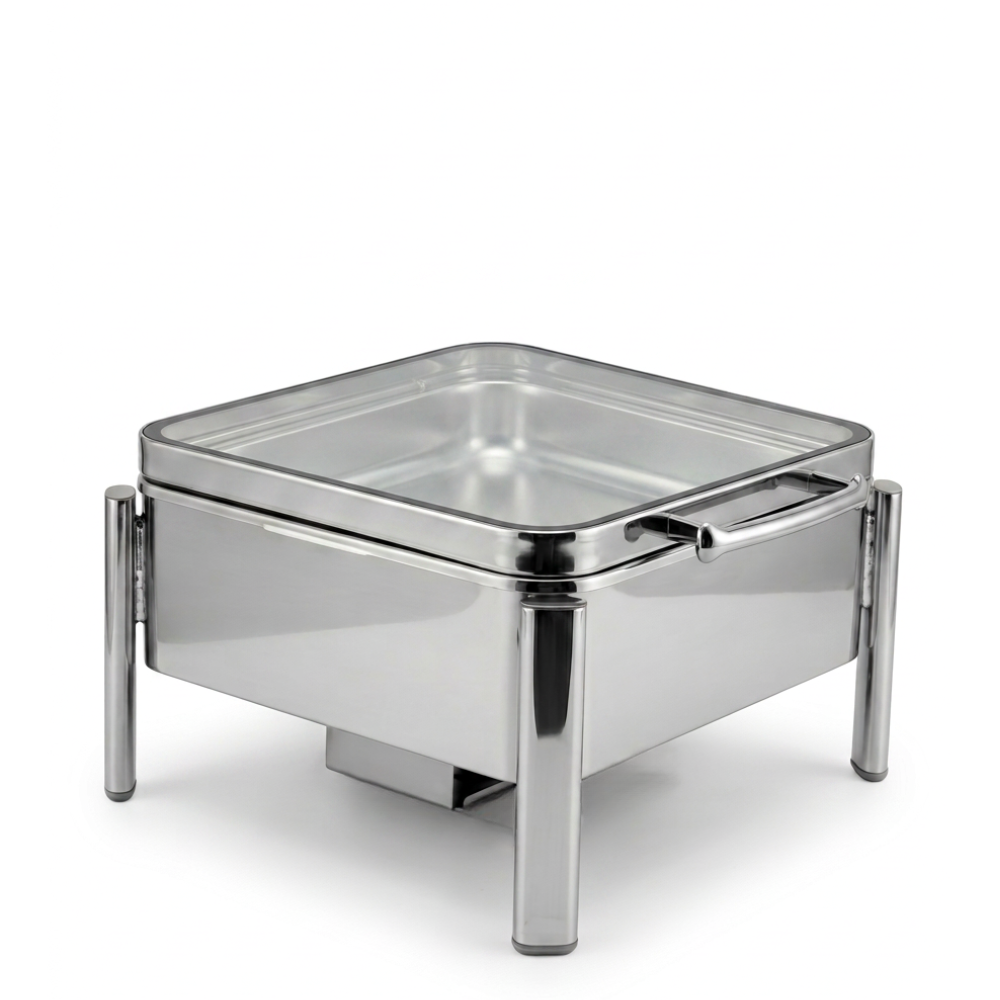
5.5L, 2/3 Size Windproof Stainless Steel Chafer (Stackable Z10 series)
Add To Quote -
New
6.8L, Round Windproof Stainless Steel Chafer (Stackable Z10 series)
Add To Quote -
New
8.5L, 1/1 Size Windproof Stainless Steel Chafer (Stackable Z10 series)
Add To Quote



 YouTube
 Instagram
 Facebook
 LinkedIn