

Breakfast buffets waste 25-35% of the food prepared for them — nearly double the hospitality sector’s overall average food waste rate of roughly 18% of total food purchased. That gap exists largely because buffet service structure, not kitchen skill, drives the waste. Equipment planning is where most of that gap can be closed.
How to Reduce Food Waste at Buffet Lines with Better Equipment Planning
How to Reduce Food Waste at Buffet Lines with Better Equipment Planning
Why Buffets Waste More Than Any Other Service Style
A standard à la carte kitchen prepares to order, but a buffet must prepare in advance and hold multiple dishes simultaneously, which is exactly why breakfast buffets see waste rates of 25-35% against a broader hospitality average of about 18%. Every additional dish on the line adds another point where over-preparation, uneven holding, or slow-moving stock can generate waste.
Matching GN Pan Size to Actual Dish Demand
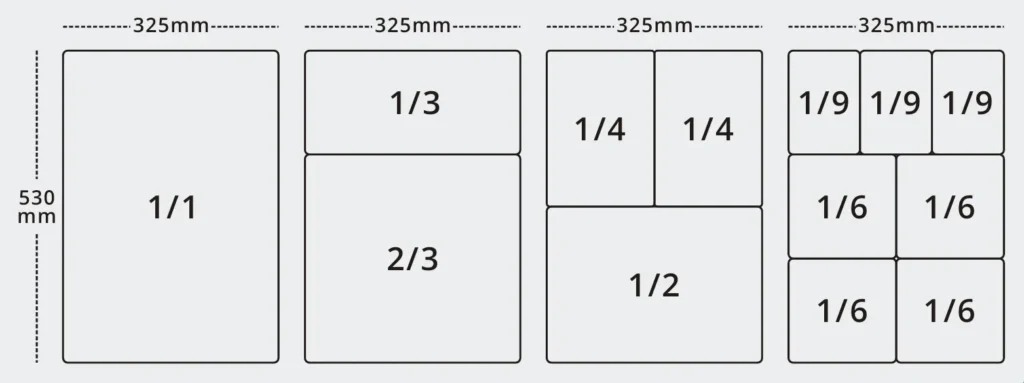
The gastronorm system exists precisely to solve this mismatch problem: the GN 1/1 base unit (530 x 325mm) can be divided into GN 1/2, GN 1/3, GN 1/4, GN 1/6, and GN 1/9 fractional sizes, letting kitchens size each dish’s pan to its expected demand rather than defaulting to one oversized pan for everything. A slow-moving garnish or condiment belongs in a GN 1/6 or GN 1/9, not a full GN 1/1 that invites over-filling and prolonged exposure to holding heat.
Applying Standard Food Cost Discipline to the Buffet Line
Restaurant food cost management is typically built around the formula: Cost of Goods Sold ÷ Total Food Revenue × 100, with full-service operators targeting a 28-35% food cost percentage. Buffets are often exempt from this per-dish discipline because pricing is set per guest rather than per plate — but applying the same waste-tracking logic at the pan level (weighing what’s returned to the kitchen versus what’s plated) gives buffet operations the same visibility à la carte kitchens already use.
Daily Waste Logging by Station, Not Just by Meal Period
Food cost control best practice calls for logging waste daily and categorizing it by cause — spoilage, overcooking, or customer leftovers — rather than reviewing waste only in aggregate at month-end. Applied to a buffet, this means tracking waste separately by station (proteins, salads, desserts) so equipment and portioning decisions can be adjusted station-by-station instead of guessing at the buffet level as a whole.
FIFO Rotation Applied to Buffet Backup Stock
First In, First Out (FIFO) rotation is a foundational waste-control principle for any commercial kitchen, ensuring older stock is used before newer stock to reduce spoilage. Buffet backup trays waiting to refill the line should follow the same FIFO discipline as walk-in inventory, rather than being refilled in whatever order is most convenient during a rush.
Depth Selection as an Overlooked Waste Lever
GN pans come in standard depths of 20mm, 40mm, 65mm, 100mm, 150mm, and 200mm, and choosing a shallower depth for high-turnover items naturally limits how much food can sit in reserve at once, which indirectly caps over-preparation for that dish [web:1762][web:1763]. A 200mm-deep pan half-filled “to be safe” holds far more excess food than a 65mm pan filled to the same relative capacity.



 YouTube
 Instagram
 Facebook
 LinkedIn