

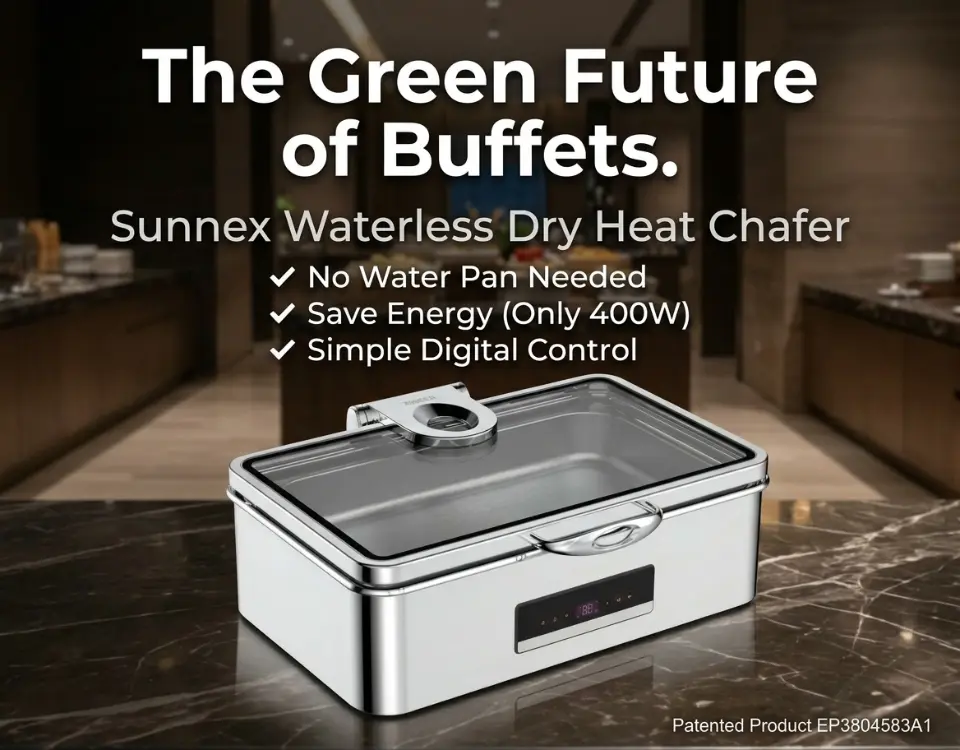
The traditional water-pan chafer has been the buffet standard for decades, but a growing number of hotels are shifting to waterless dry heat technology — and the reason isn’t complicated. It uses less than half the electricity of older electric chafers while removing one of the most tedious tasks on any buffet line: refilling water.
The Rise of Waterless Chafers: Why More Hotels Are Switching
The Rise of Waterless Chafers: Why More Hotels Are Switching
The Core Problem Waterless Technology Solves
Anyone who has run a buffet line knows the routine: constantly checking the water pan, refilling it mid-service, and worrying about it boiling dry if attention slips for too long. Waterless dry heat chafers remove this entirely by heating the food pan directly, with no water pan to monitor, refill, or risk running dry during a busy service period.
Labor Savings Layered on Top of Energy Savings
Beyond electricity, waterless chafers save manpower directly — staff no longer need to interrupt other duties to check and refill water pans throughout service, and the risk of a dry-run pan damaging the unit disappears entirely. For hotels already managing tight F&B staffing levels, removing one recurring maintenance task from every chafer station adds up across a full buffet line.
Precise Digital Control Without a Water Buffer
Some waterless models add precision that traditional water-bath chafers can’t easily match: digital control with multiple preset temperature levels — for example 54°C, 76°C, and 88°C — lets operators fine-tune holding temperature to the specific dish rather than relying on the water bath’s natural heat buffering. This level of control also supports consistent compliance with hot-holding standards, since staff can select a preset that reliably keeps food above the regulatory minimum without babysitting a water level.
Design Details That Support the Switch
Waterless dry heat chafers typically retain the features hotels already expect from premium chafers — an advanced hydraulic hinge for smooth, slow-closing lids, mirror-polished 304 stainless steel bodies, and a large glass window for visibility — while adding an insulation layer for a cool-touch outer surface, since the unit runs its heating element without a water buffer between the heat source and the outer frame.
Where the Shift Is Happening First
Busy catering establishments and hotels running frequent, high-volume buffet services are the earliest adopters, since these are exactly the operations where the combined energy and labor savings compound fastest across daily use. For lower-frequency or occasional-use buffet setups, the payback timeline for switching is naturally longer, but the underlying efficiency case remains the same regardless of usage volume.
Sunnex Dry Heat Waterless Chafer
-

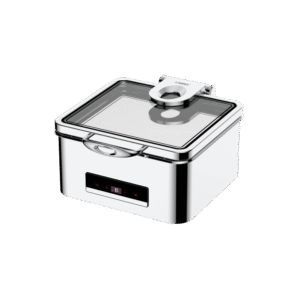
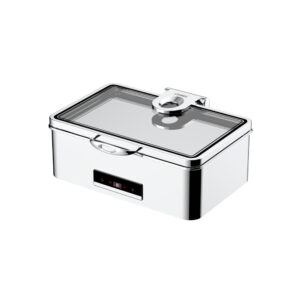
2/3 Size 9L Waterless Dry Heat Chafer with Stainless Steel ...
Add To Quote -
New
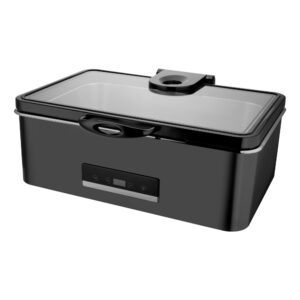
Full Size 13.5L Waterless Dry Heat Chafer with Stainless Steel ...
Add To Quote -
New
Full Size 13.5L Waterless Dry Heat Chafer with Stainless Steel ...
Add To Quote -
Round 6.8L Waterless Dry Heat Chafer with Stainless Steel Cover ...
Add To Quote




 YouTube
 Instagram
 Facebook
 LinkedIn